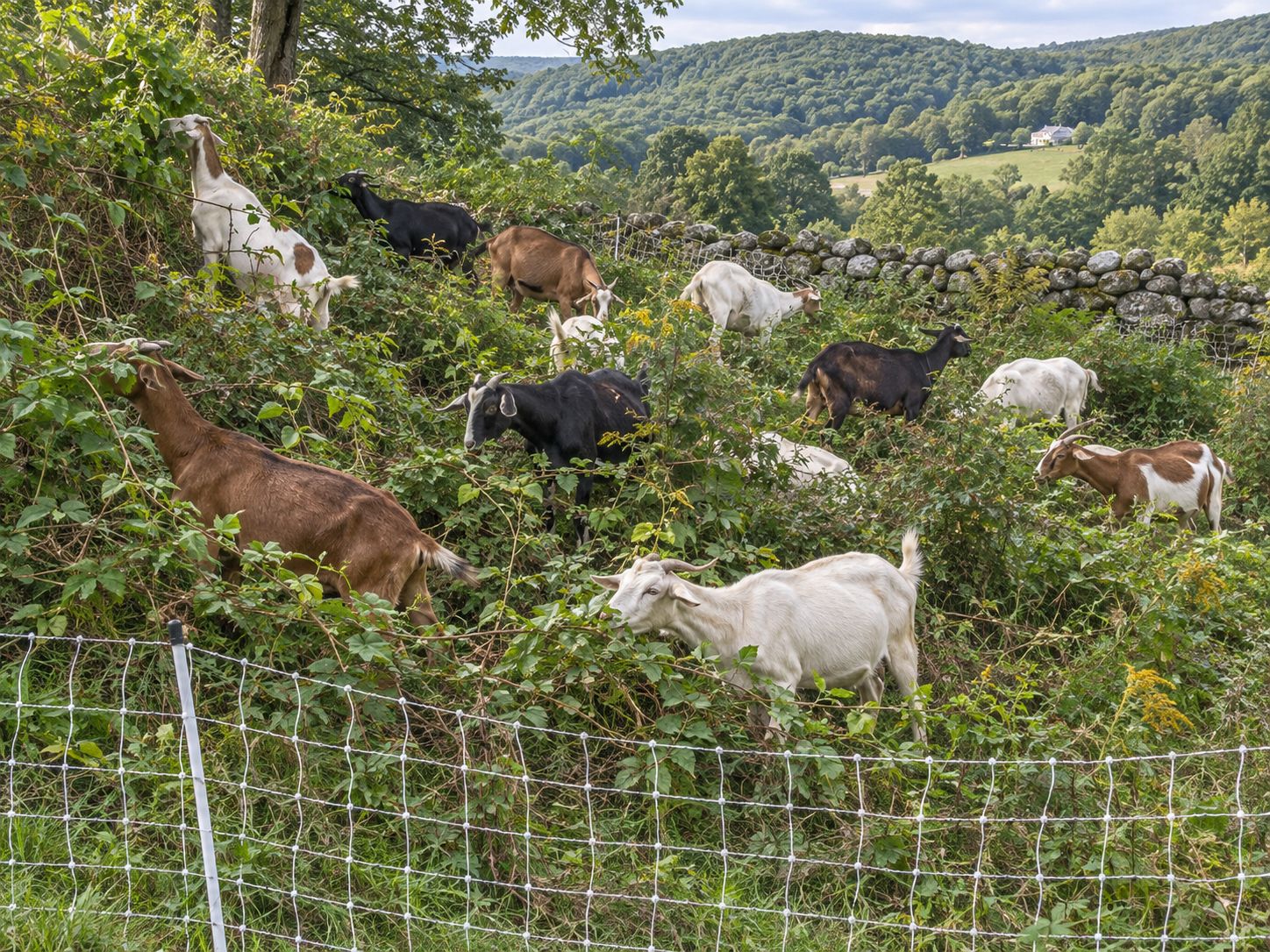


GoatScapers goats browsing an overgrown hillside inside a portable electric fence, with Litchfield County hills behind

Litchfield County, Connecticut

Tough brush. Hungry goats.

Goat-powered land clearing, brush control and poison ivy management. Our 30-goat herd clears about an acre a week while naturally fertilizing your soil.

Our services

Every property is different, so every job starts with a walk-through. These are the problems our herd handles best in Litchfield County's hills, wood lines and stone-walled fields.

Two goats standing on their hind legs stripping leaves from tangled brush and vines

Land clearing & brush control

Overgrown lots, thickets, vines and saplings. Goats browse from the ground up to about six feet, standing on their hind legs to reach growth a mower never touches. You're left with an open, walkable space that's far easier to finish or maintain.

  • Overgrown lots
  • Thickets & vines
  • Wood lines
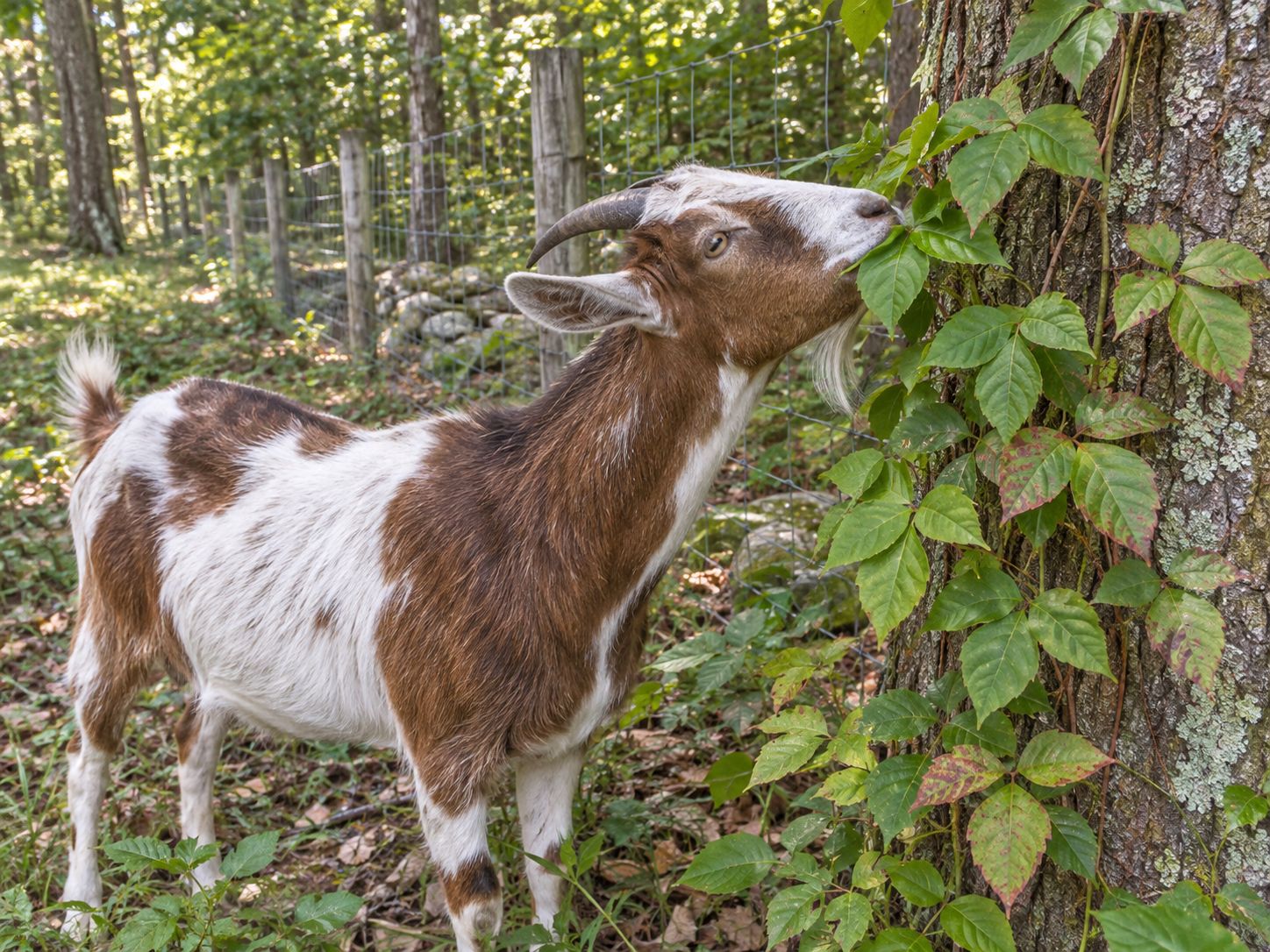
A goat eating poison ivy leaves climbing a tree trunk

Poison ivy management

Goats eat poison ivy, oak and sumac without the itchy reaction people get, so nobody on your crew has to wade into it.

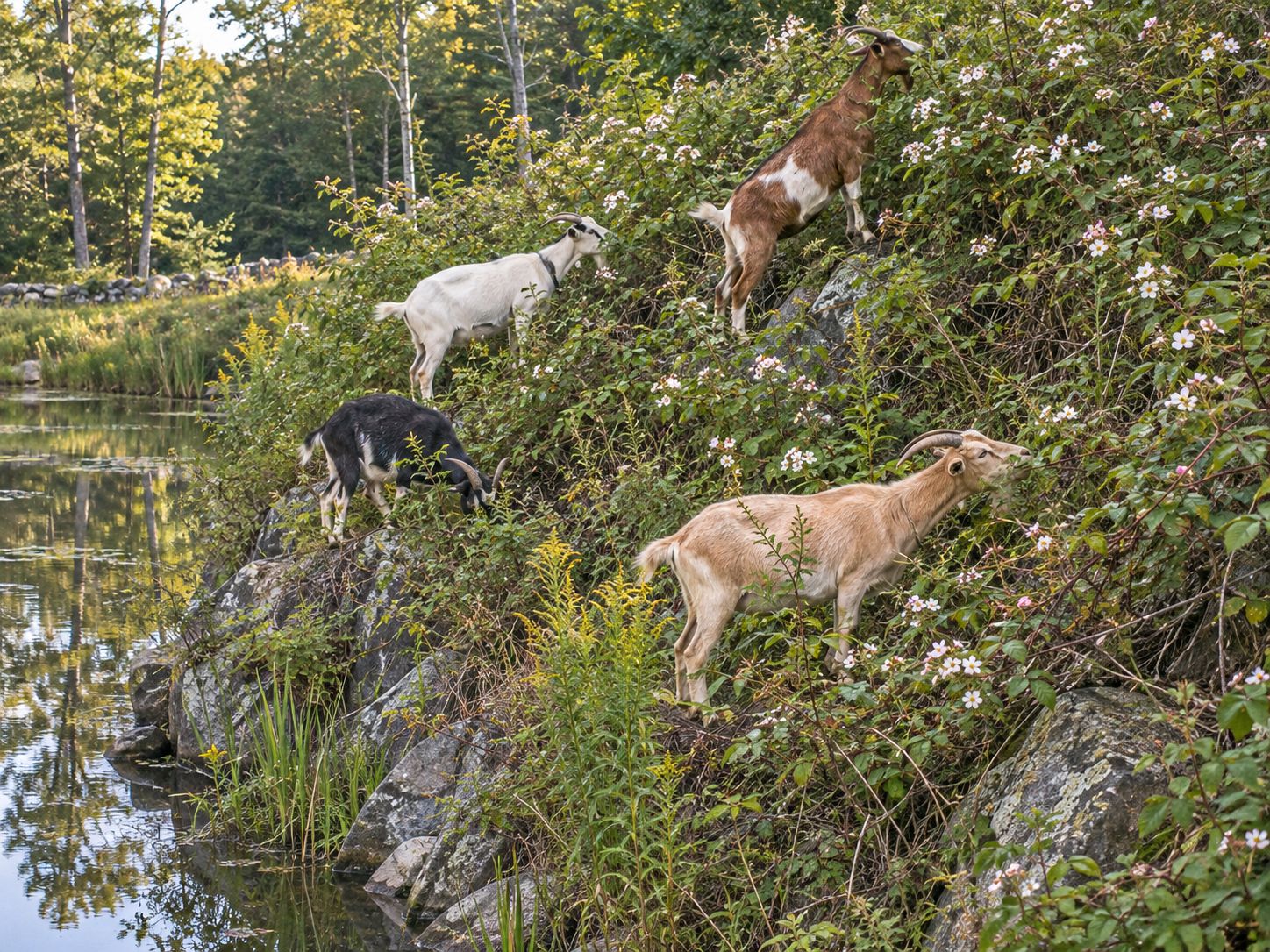
Goats browsing a steep rocky embankment above a pond

Steep & hard-to-reach areas

Slopes, ravines, rocky banks, pond edges and stone walls. Goats go where machines and people can't safely work.

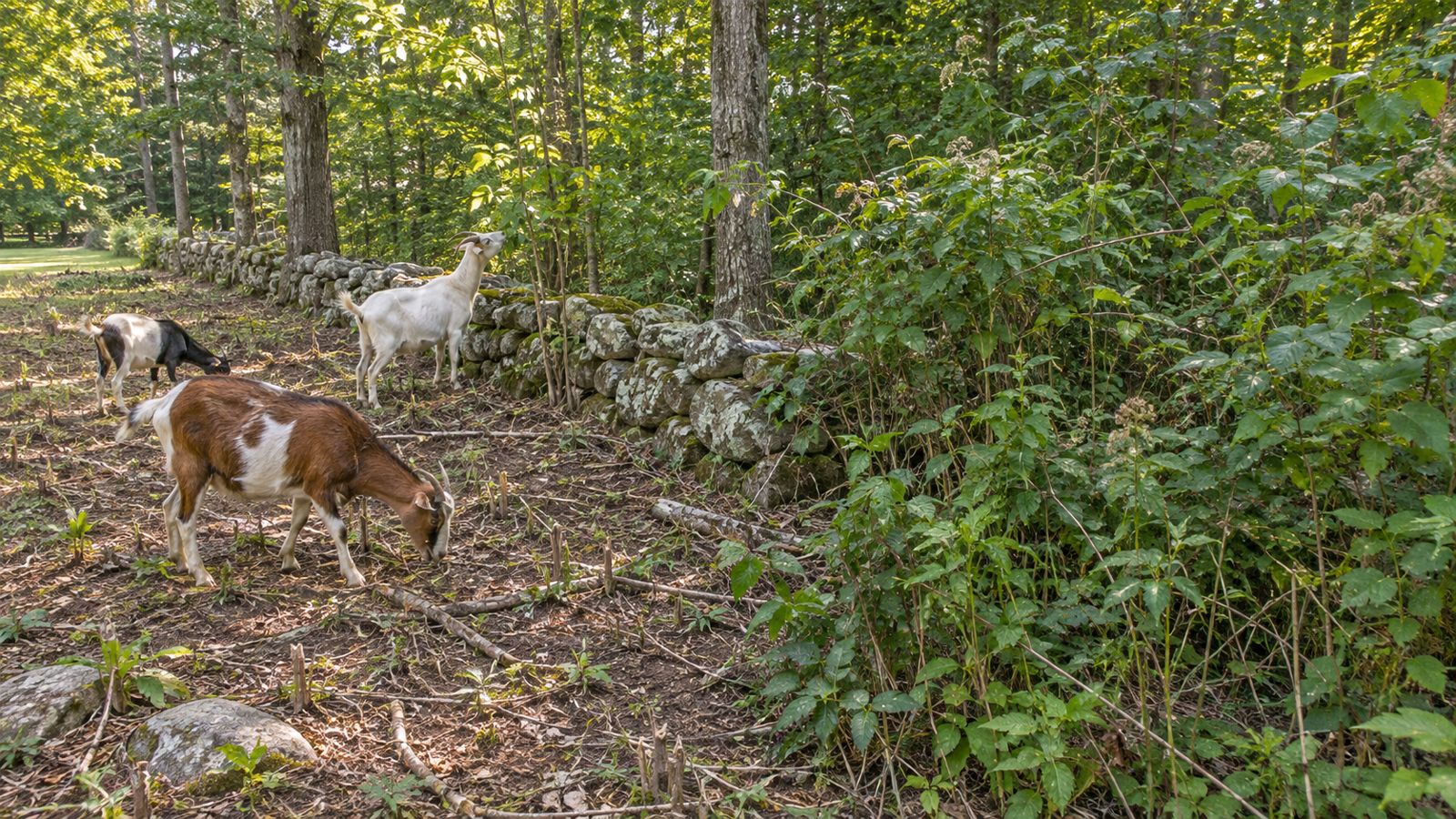
A wooded edge browsed clean by goats, revealing an old stone wall

Fence line & stone wall reclamation

Get back the fences, stone walls and property edges that brush and vines have swallowed over the years.

Invasive plant control

Repeated grazing weakens the invasives that crowd out native plants across the county.

  • Japanese knotweed
  • Japanese barberry
  • Multiflora rose
  • Oriental bittersweet
  • Honeysuckle
  • Wineberry

Weed management & seasonal grazing

Keep fields, meadows and back acreage under control with return visits each season, so overgrowth never gets ahead of you again.

  • Fields
  • Meadows
  • Repeat visits

How it works

We handle the setup, the animals and the cleanup. You watch the transformation.

  1. Give us a call

    Tell us where the property is and what's growing there.

  2. Free site visit

    We walk the area, check for plants that are toxic to goats, and give you a quote.

  3. Fence & setup

    We clear a path and put up portable electric fencing, plus water for the herd.

  4. The crew goes to work

    The herd clears about 1 acre a week, guarded by our two Great Pyrenees. We check in daily.

  5. Pickup & walk-through

    We remove the herd and fencing, then walk the site with you.

Daily & weekly goat rentals

Book the herd for a few days or by the week. Every price depends on acreage, how thick the brush is, the terrain and fencing needs, so we quote after a free site visit.

Rentals
Daily & weekly
Clearing pace
About 1 acre a week
Depends on how thick the brush is

Why you should use a goat

Goats are browsers, not grazers. They'd rather eat brush, vines and weeds than your lawn, which makes them some of the best land-clearing help you can hire.

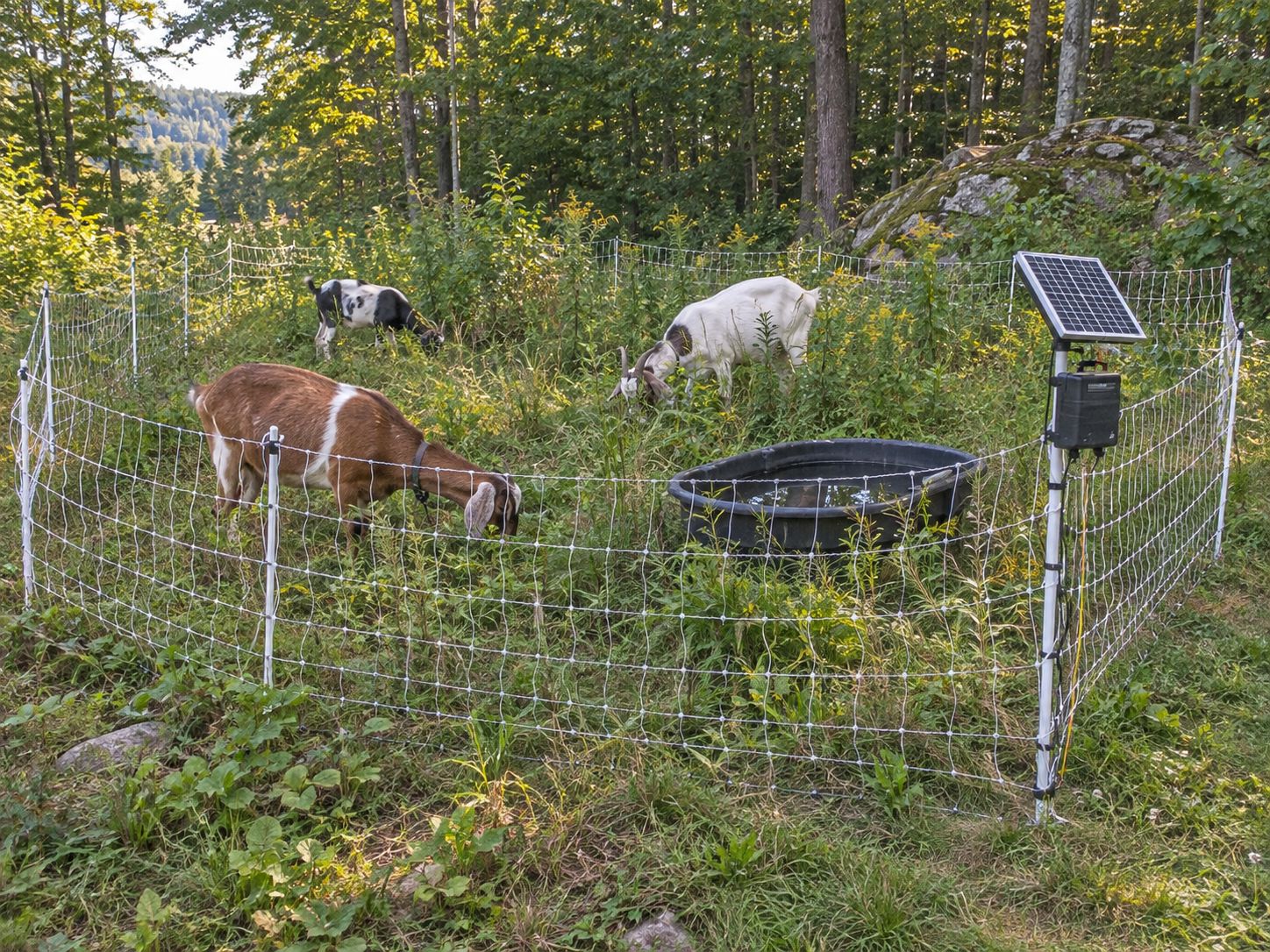
Goats inside a portable electric net fence with a solar charger and water trough at the edge of the woods
Portable solar electric fencing keeps the herd on the job and predators out.
  • They go where mowers can't

    Steep slopes, rocky ground, ravines and wet edges are easy work for goats, with less impact on the land than heavy equipment.

  • No chemicals

    Goats knock back brush and invasives without herbicide, which is better near wells, ponds, streams, kids and pets.

  • Poison ivy is on the menu

    They eat poison ivy, briars and thorny growth that's miserable or dangerous for people to clear by hand.

  • Natural fertilizer

    As they browse, goats return nutrients to the soil through their manure. Their droppings also don't smell as strong as other livestock.

  • Fewer seeds left behind

    Eating seed heads cuts down on next year's seeds, and immature seeds don't survive a goat's digestion.

  • Quiet and low-impact

    No engines, no fuel, no noise. Just a herd steadily working from dawn to dusk and beyond.

  • Easier follow-up

    Grazing opens up the area and weakens invasives, so any remaining cleanup is faster, more targeted and cheaper.

  • Less fire fuel

    Clearing dense brush and dry understory reduces the fuel that lets fires spread near homes and outbuildings.

  • The honest part

    Goats strip leaves and young growth; they don't dig out roots. Tough invasives can re-sprout, so most properties get the best results from repeat visits or follow-up work. Larger trees and woody stems may stay behind. We'll tell you what to expect at the site visit.

Common questions

The things people ask us most before the herd shows up.

Are the goats safe around kids?

Yes. Our goats are friendly and safe around kids. They stay inside a portable electric fence while they work, so everyone can watch the crew from outside the fence.

What happens if it rains?

We set up a small shelter on site so the herd has a dry place to wait out the weather. The goats stay on the job and pick back up when it clears.

Do I need to be home?

No. Once the fence and shelter are up, the herd works on its own with our two Great Pyrenees watching over them, and we check in every day. You don't need to be there.

What will the goats eat?

Almost everything: brush, vines, weeds, poison ivy and most invasive plants. During the free site visit we walk the property and check for any plants that are toxic to goats before the herd moves in.

How fast do they work?

The herd clears about 1 acre a week. Thick brush takes longer, and lighter growth goes faster.

How do I get started?

Call (203) 558-6553 or send us a message to book a free site visit. We'll walk the property and give you a quote for a daily or weekly rental.

Your overgrowth is our goats' next meal.

Serving Litchfield County. Call or send us a message to set up a free site visit.